




A tenant background check in Melbourne can save you thousands in missed rent, legal fees, and property damage, or cost you just as much if you skip it.
Most Melbourne landlords don’t realise this: 80-95% of investment properties achieve a rent increase when a new tenant moves in, but that only delivers value if the tenant pays on time, every time.
A proper tenant screening process isn’t about being difficult. It’s about protecting your investment property. This guide shows you exactly how to verify rental history, confirm income and employment, and avoid the tenants who’ll turn your passive income into a full-time headache.
Whether you’re a first-time landlord, property investor, or real estate agent managing multiple properties, you’ll learn how to choose reliable tenants confidently and keep your rental property profitable.
Table of Contents
We’ll walk you through the essential steps of verifying tenants in Melbourne, from legal must-knows and thorough screening to identifying warning signs, avoiding pitfalls, and getting expert support.
Understanding Tenant Background Checks in Melbourne
A 15-minute inspection tells you how someone presents. Their rental history tells you how they actually behave when no one’s watching.
A proper screening process reveals whether a potential tenant can afford the monthly rent, honour a tenancy agreement, and maintain your property without constant issues.
Pre-screening catches red flags before you waste time on a complete application.
A thorough tenant background check uncovers relevant information, such as:
- Payment history at their previous rental
- Whether they consistently paid rent on time
- If their income matches the rent they’re applying for
- Problems flagged by former property managers
- Relevant court judgments or criminal convictions
- Gaps in their rental history that don’t add up
A property manager in Melbourne handles this screening process daily and knows precisely where to look. Most tenancy problems are predictable. The warning signs exist before you sign the lease.
Legal Requirements in Melbourne You Should Know
Before you run any checks, you need written consent from the prospective tenant. This applies to tenancy database searches, credit checks, and reference calls with previous property managers.
It’s required under the Residential Tenancies Act 1997 (Vic) and protects you from privacy complaints.
The Equal Opportunity Act 2010 sets clear boundaries.
You can reject a tenant for legitimate tenancy reasons, such as insufficient income, poor rental history, or bad references.
You cannot reject them for age, disability, gender identity, family status, or other personal characteristics unrelated to their ability to pay rent and maintain your property.
What you can assess:
- Income verification and employment stability
- Rental behaviour at previous properties
- Credit history and court judgments
- Information from the National Tenancy Database
What you cannot consider:
- Whether they have children
- Their cultural background or religion
- Medical conditions or disability
- Sexual orientation or gender identity
Stick to the tenancy itself. If your screening criteria apply equally to every rental application, you’re protecting both your investment property and yourself from discrimination claims.
What To Include In a Proper Tenant Background Check

A complete screening process covers five key areas. Miss one and you’re guessing.
1. Rental History and Previous Property Managers
Contact the tenant’s previous landlords or property managers directly. Ask specific questions:
- Did they pay rent on time every month?
- Did they give proper notice before leaving?
- Would you rent to them again?
- Any damage beyond normal wear and tear?
If someone avoids providing previous landlord details, that’s your answer.
2. Income Verification and Employment
The tenant’s income should be at least 3x the monthly rent. Verify this with recent payslips, an employment letter, or bank statements showing regular deposits. Self-employed applicants need tax returns or ABN verification.
3. Credit History and Financial Records
A credit report reveals patterns such as late payments, defaults, court judgments, and bankruptcies. One late payment isn’t necessarily a deal-breaker. A pattern of missed obligations usually is.
4. Tenancy Database Checks
The National Tenancy Database and TICA show:
- Previous evictions
- Rental arrears over $1,000
- VCAT tribunal matters
- Confirmed identity details
- Serious breaches of tenancy agreements
These databases only list significant issues, so any listing is worth investigating.
5. Personal and Professional References
Rental references matter most. Personal references (friends, colleagues) add context about reliability and communication, but shouldn’t override red flags in rental history or finances.
What You Should Check for Each Applicant
| Screening Area | What To Check | Green Flag | Red Flag |
| Rental History | Contact last 2 landlords | Paid on time, gave proper notice, no damage | Eviction, consistent late payment, property damage |
| Income | Payslips, employment letter | Income 3x monthly rent or higher | Income under 2.5x rent, unstable employment |
| Credit Report | Equifax or Experian check | Clean record or minor historic issues | Multiple defaults, current court judgments |
| Tenancy Database | National Tenancy Database, TICA | No listings found | Eviction, arrears over $1,000, VCAT matters |
| Identity | Driver’s licence, passport | Matches application details precisely | Reluctance to provide ID, details don’t match |
| References | 2 rental + 1 personal | Previous landlord would rent again | Vague responses, can’t verify contacts |
Red Flags When Screening Prospective Tenants
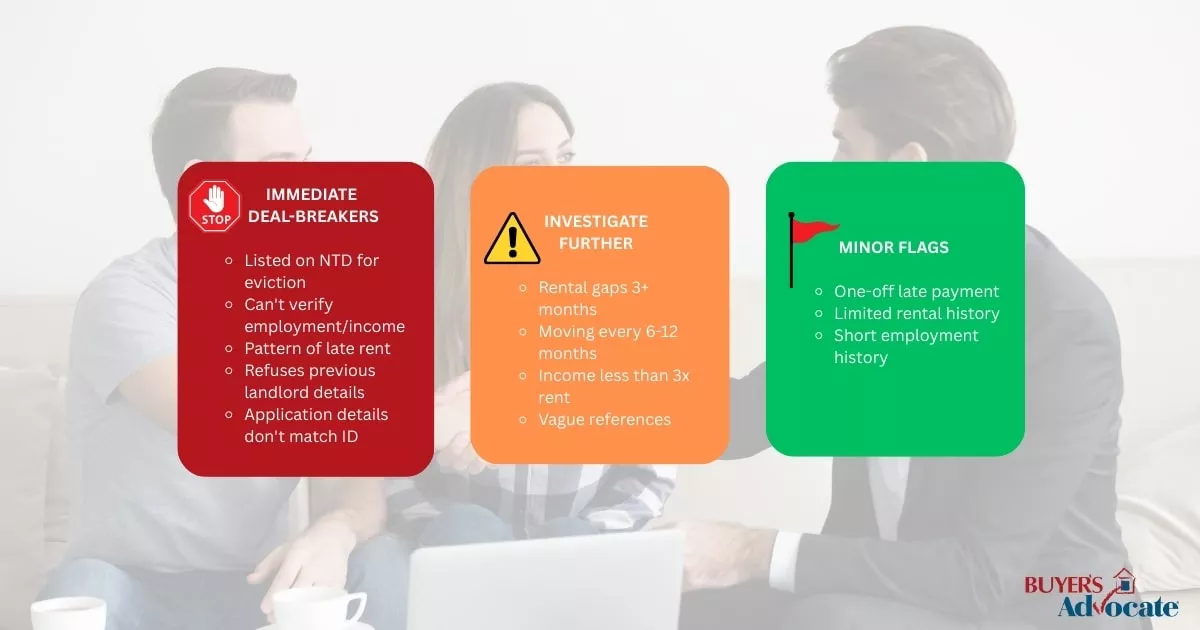
Some warning signs are apparent. Others only matter when combined with other issues.
Immediate deal-breakers:
- Listed on the National Tenancy Database for eviction or serious breaches
- Cannot verify current employment or income source
- Rental history shows a pattern of late rent payments
- Refuses to provide previous landlord contact details
- Details on the rental application don’t match ID or references
Concerning patterns (investigate further):
- Gaps in rental history longer than 3 months with no explanation
- Moving properties every 6-12 months repeatedly
- Previous property managers report damage or lease violations
- Income is less than 3x the monthly rent
- References are vague or can’t confirm basic details
- Pressuring you to skip parts of the screening process
Minor flags (context matters):
- One-off late payment with a reasonable explanation
- Short employment history (recent graduate, career change)
- Limited rental history (first-time renter, previously owned)
One red flag isn’t necessarily a rejection. Multiple red flags together, especially from the first two categories, usually mean it’s time to move on to the next applicant.
The Biggest Mistake Melbourne Landlords Make

Rushing tenant background checks because the property is vacant.
When your Fitzroy apartment or Bentleigh investment property sits empty, every week feels expensive.
It’s tempting to approve the first applicant who seems decent at the inspection. But most tenant problems start with landlords who skipped proper screening to fill the vacancy faster.
Here’s what rushing actually costs:
A vacant Melbourne property for two extra weeks while you complete thorough background checks: around $800-$1,200 in lost rent (based on median rents).
A problem tenant who stops paying after three months: $3,600-$5,400 in missed rent, plus VCAT application fees, potential property damage, cleaning costs, and another 2-4 weeks to find a replacement tenant. Total cost: $6,000-$10,000+.
The warning signs are almost always visible during the screening process – gaps in rental history, references that don’t check out, income that barely covers the rent, or previous property managers who hesitate when you ask if they’d rent to this person again.
Take the full 2-3 business days to run proper checks.
Contact previous landlords in Melbourne suburbs where they’ve rented. Search the National Tenancy Database properly. Verify their employment with their actual employer, not just a payslip they could have created.
Melbourne’s rental market moves quickly, but the applicants willing to wait for your thorough tenant background check are usually the ones worth having.
How Buyer’s Advocate Helps With Comprehensive Tenant Screening
Most Melbourne landlords start doing their own tenant screening. Then, after one bad experience with missed rent or a VCAT dispute, they hand the process to someone who does comprehensive background checks every day.
At Buyer’s Advocate, we manage a focused portfolio of Melbourne investment properties with one priority: finding tenants who pay on time and stay long-term. We don’t rush to fill vacancies.
We screen properly.
Our tenant background check process includes:
- Verification calls with at least two previous landlords in Melbourne
- Income confirmation (minimum 3x monthly rent requirement)
- Employment verification directly with employers
- Reference checks that go beyond “yes, they were fine.”
The difference is in the details. When a previous property manager hesitates or gives vague answers, we dig deeper. When rental history has unexplained gaps, we ask specific questions. When income documents look inconsistent, we verify directly with the source.
Our approach typically results in longer tenancies (18-24 months average vs. Melbourne’s 12-month median), consistent rent payments, and fewer maintenance emergencies from tenants who actually respect the property.
If you’d rather focus on your portfolio growth while we handle the tenant background checks, learn more about our property management fees in Melbourne and the value we deliver to property investors across Melbourne’s inner and middle suburbs.
FAQs
Do I need a tenant's consent to run a background check in Melbourne?
Yes, you must obtain written consent from the prospective tenant before conducting any background checks in Melbourne. This is required under the Residential Tenancies Act 1997 (Vic) and applies to credit checks, tenancy database searches, and reference calls with previous landlords. The consent protects both parties from privacy complaints.
How much does a tenant background check cost in Victoria?
A tenant background check in Victoria typically costs $50-$100 for a comprehensive screening package. Individual checks cost less: National Tenancy Database searches are $20-$40, and credit reports are $10-$30. If you use a property manager in Melbourne, tenant screening is usually included in their management services. The cost of one bad tenant (potentially $6,000-$10,000 in missed rent and VCAT fees) far outweighs the expense of proper screening.
Can I reject a tenant based on a bad credit report?
Yes, you can reject a tenant based on a bad credit report that shows financial instability, recent defaults, or a pattern of late payments. Poor credit history often indicates difficulty paying rent consistently. However, you must apply the same screening criteria to all applicants to comply with Victorian anti-discrimination laws.
How do I verify a tenant's rental history in Melbourne?
Verify a tenant’s rental history by contacting at least two previous landlords or property managers directly and asking specific questions: Did they pay rent on time every month? Did they maintain the property well? Would you rent to them again? Were there any issues during the tenancy? Check that their rental application matches what previous landlords tell you, as inconsistencies are red flags.
What's the best tenant screening service in Melbourne?
The best tenant screening service in Melbourne depends on whether you’re self-managing or using a property manager. For DIY landlords, the National Tenancy Database and credit reporting agencies like Equifax provide essential checks. For comprehensive tenant background checks in Melbourne handled by experienced property managers, we provide thorough screening that prioritises quality tenants and long-term tenancies over quick placements.
Final Say
Book a call with our experienced property managers in Melbourne today and let us help protect your rental property investment.