


Did you know that property management fees in Melbourne typically range between 5% and 8% of your weekly rent?
For property investors, understanding these fees is essential to accurately calculating your rental income and protecting your investment.
This comprehensive guide walks you through the fees charged by property management companies, including leasing, marketing, inspection, and renewal costs.
You’ll learn what services are included, how to compare agencies, and tips to get the best value for your money.
Whether you’re a first-time landlord or expanding your portfolio, this article equips you with the knowledge to make informed decisions and maximise your rental returns.
What Are Property Management Fees?
Property management fees are the charges you pay to a professional property management company or real estate agent to oversee your rental property on your behalf. These real estate management fees compensate managers for handling everything from finding prospective tenants and vetting them to coordinating repairs and ensuring compliance with Victorian rental legislation.
Why Do Property Managers Charge Fees?
Professional property management is a service business. Property managers are responsible for protecting your investment, maintaining legal compliance, keeping tenants happy, and maximising your rental income.
Their fees cover their time, expertise, administrative systems, accounting systems and the infrastructure needed to manage properties effectively.
Just as a buyer’s advocate adds value by securing the right property at the right price, a quality property manager adds value by minimising vacancies, reducing tenant issues, and preserving your property’s condition over time.
Percentage-Based vs Fixed-Rate Fees
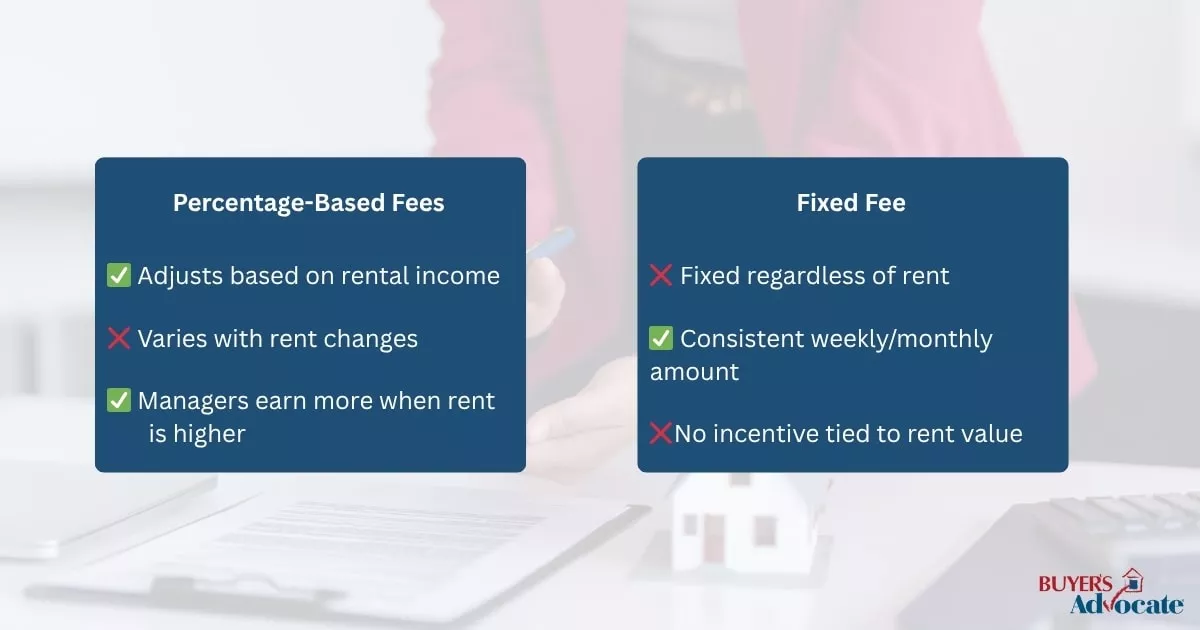
Melbourne property managers typically use one of two fee structures:
Percentage-based fees are calculated as a percentage of your weekly or monthly rental income—commonly between 5% and 8%. If your property rents for $500 per week with an 8% management fee, you’d pay $40 per week ($2,080 annually).
Fixed-rate fees charge a set dollar amount regardless of rent. For example, $50 per week, whether your property rents for $400 or $600. This provides cost certainty but may be less favourable for lower-rent properties.
Most Melbourne agencies favour percentage-based fees, which align the manager’s incentive with yours—the more rent they collect, the more they earn.
Average Property Management Fees in Melbourne
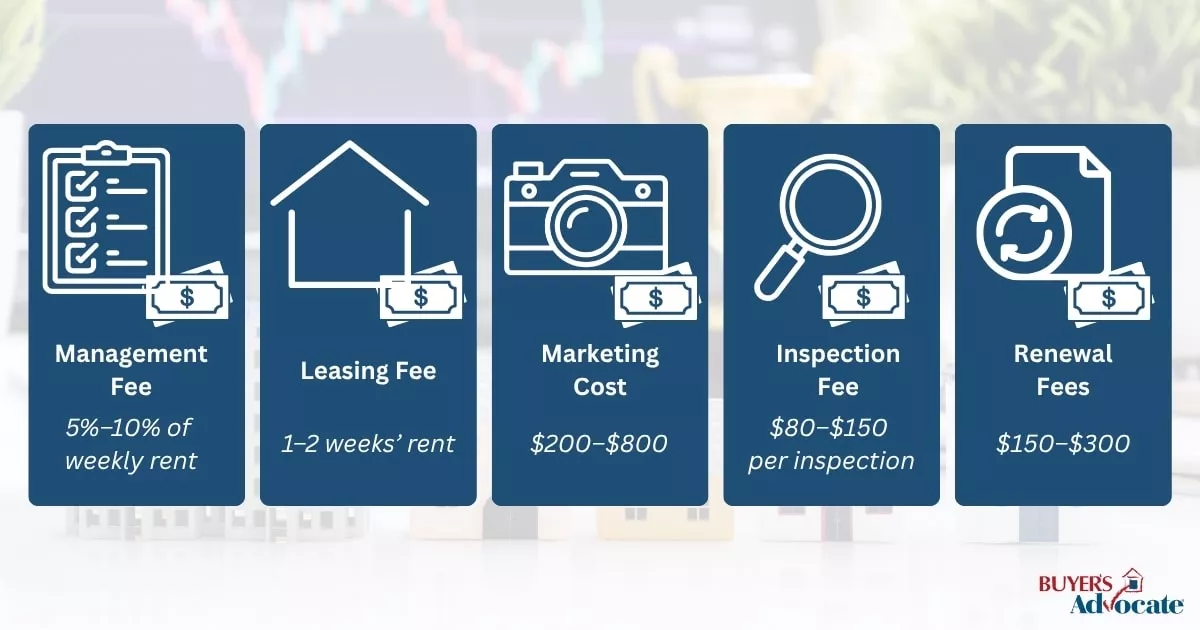
Understanding the fee landscape helps you budget accurately and identify whether an agency’s pricing is competitive.
Management Fees (5–10%)
The core management fee in Melbourne typically ranges from 5% to 10% of weekly rent.
Inner-city properties and high-value rentals often sit at the lower end (5–7%), while properties in outer suburbs or those requiring more hands-on management may attract fees toward the higher end (8–10%).
For context, a property renting at $550 per week with a 7% management fee would cost approximately $1,995 annually in management fees alone.
Leasing Fees
When a property manager secures a new tenant, they typically charge a leasing fee—usually equivalent to one to two weeks’ rent. This covers conducting inspections, screening applicants, preparing lease agreements, and completing the ingoing inspection report.
Some agencies include one leasing fee per year in their management package, while others charge it separately each time a property is re-let.
Marketing Costs
Professional property photography, online listings, signage, and premium placement on rental platforms may be included in the leasing fee or charged separately. Budget between $200 and $800 for comprehensive marketing, depending on the property and agency approach.
Quality photos and marketing reduces vacancy periods, so this is often money well spent—just like investing in a buyer’s advocate during purchase saves money by avoiding overpriced properties.
Routine Inspection & Admin Fees
Most property management agencies include routine inspection fees (usually quarterly) in their base management fee. However, some charge separately for detailed inspection reports, usually between $80 and $150 per inspection.
Administrative service fees may also apply for tasks like arranging repairs, processing/paying invoices, and arranging EOFY statements.
Exit or Renewal Fees
When a tenant vacates, some property managers charge an exit fee to coordinate the final inspection, bond refund process, and property handover. Similarly, lease renewal fees (often charged at a percentage or a fixed fee) may apply when an existing tenant signs a new term.
Always clarify these fees upfront—they can add hundreds of dollars to your annual property management costs.
What’s Typically Included in the Management Fee?

Understanding what’s covered by your base management fee helps you assess value and avoid surprise charges.
Rent Collection
Property managers handle all rent collection, chase late payments, and manage arrears. They’ll deposit funds directly into your account (usually monthly) and provide regular statements showing income and expenses.
Tenant Liaison
Your property manager becomes the primary contact for tenants, handling maintenance requests, answering questions, and managing disputes. This shields you from after-hours calls and allows you to maintain professional distance.
Maintenance Coordination
When something breaks, your property manager coordinates tradespeople, obtains quotes, and arranges repairs (usually up to a pre-agreed limit without requiring your approval). This ensures issues are resolved quickly, keeping tenants satisfied and protecting your property.
Routine Inspections
Regular property inspections—typically every six months—ensure tenants are maintaining the property appropriately, identify maintenance issues early, and provide documentation of property condition throughout the tenancy.
Financial Reporting
Quality property managers provide detailed financial reports showing rental income, expenses, maintenance costs, and account balances. These reports are essential for tax time and tracking your investment performance.
To understand everything your fees actually cover, visit our guide on what a property manager in Melbourne does.
Are These Fees Worth It?
For many property owners, especially those focused on long-term rental property investment, professional management services are a value-adding asset.
Many property owners find that the time saved, legal protection, and tenant quality provided by a good property manager easily justify the fees.
Benefits of Professional Management
Time savings: Managing a property yourself requires availability for inspections, maintenance coordination, tenant queries, and emergencies—sometimes outside business hours.
Legal compliance: Victorian rental laws are complex and constantly evolving. Professional managers stay current with legislation, reducing your risk of costly legal mistakes.
Tenant quality: Experienced property managers have established screening processes, reducing the likelihood of problematic tenants.
Faster re-letting: Professional marketing and established tenant networks minimise vacancy periods, preserving your rental income.
Maintenance oversight: Regular inspections catch small problems before they become expensive repairs.
Objective decision-making: Property managers provide experienced, unemotional advice on rent setting, tenant issues, and property improvements.
Hidden Costs of DIY Property Management
While managing your own property eliminates management fees, it introduces other costs:
- Your time (valued at your actual hourly rate)
- Potential for longer vacancy periods without professional marketing
- Risk of selecting unsuitable tenants without proper screening
- Legal exposure from compliance mistakes
- Emotional stress from tenant disputes
- Missed maintenance issues leading to larger repair bills
For most investors, particularly those building wealth through property, professional management allows them to focus on their career or finding their next investment opportunity rather than fielding maintenance calls or any other issues.
How to Compare Property Managers in Melbourne
Just as choosing the right buyer’s advocate requires evaluating expertise and approach, selecting a property manager demands careful comparison beyond just price.
What to Ask Before Signing a Contract
What’s included in your base fee? Get a complete breakdown of included services versus additional charges.
How do you screen tenants? Understand their vetting process, credit checks, and reference verification.
What’s your average vacancy period? This reveals their marketing effectiveness and tenant network strength.
How do you communicate with landlords? Clarify reporting frequency, access to online portals, and contact availability.
What’s your maintenance approval process? Know the dollar threshold for automatic approval and how emergency repairs are handled.
What are your contract terms? Understand notice periods, exit fees, and any lock-in clauses.
On average how many properties does each Property Manager look after? This will give you a good understanding on how divided the Property Managers time is.
Red Flags to Watch For
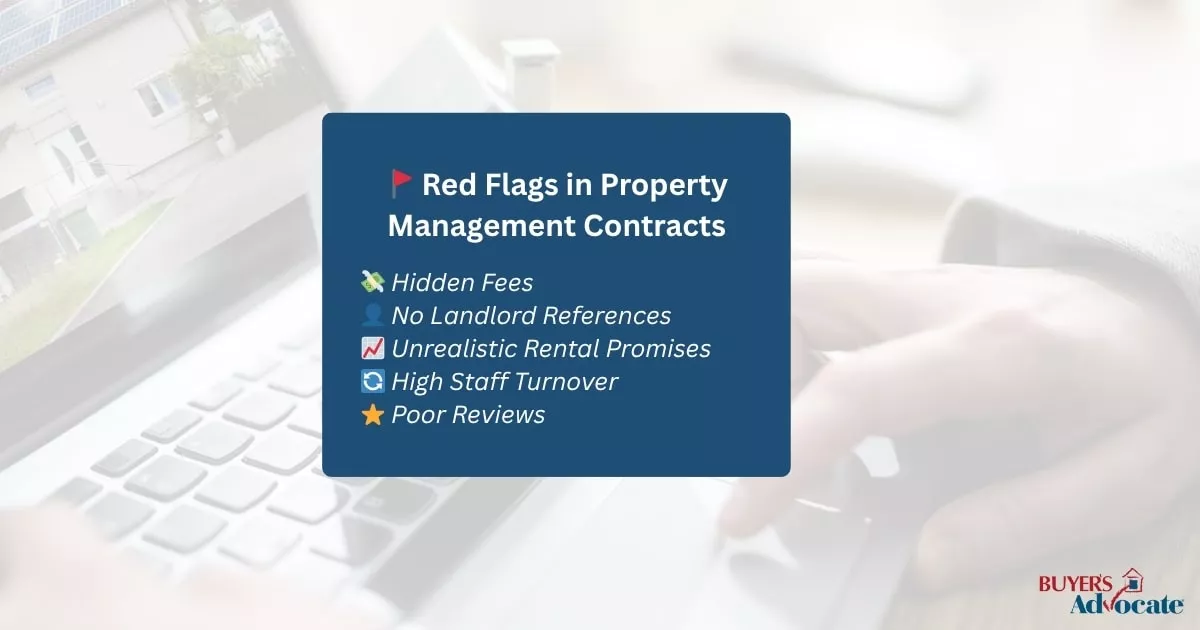
- Reluctance to provide references from current landlords
- Unclear fee structures or hidden charges
- Unrealistic promises about rental returns
- Poor online reviews or complaints to Consumer Affairs Victoria
- High staff turnover or inexperienced property managers
- No clear maintenance or emergency protocols
Value vs. Price — Don’t Just Pick the Cheapest Option
The cheapest property manager isn’t always the best value. A manager charging 8% who keeps your property tenanted 98% of the year delivers better returns than one charging 5% with a 90% occupancy rate.
Similarly, a slightly higher fee that includes proactive maintenance coordination can prevent costly emergency repairs and preserve your property’s value—just as paying for a buyer’s advocate during purchase ensures you acquire the right asset at the right price.
Consider the full picture: expertise, service quality, communication, tenant screening, and occupancy rates alongside the fee structure.
Need help deciding? Read our expert guide on how to choose the best property manager in Melbourne.
Property Management Fee Calculator Example
Here’s a simple comparison to illustrate actual costs:
Scenario: Property renting for $500/week
| Fee Structure | Weekly Cost | Annual Cost |
| 5% management | $25 | $1,300 |
| 7% management | $35 | $1,820 |
| 8% management | $40 | $2,080 |
| Fixed $45/week | $45 | $2,340 |
Additional typical annual costs:
- Leasing fee (one tenant turnover): $500–$1,000
- Marketing: $200–$500
- Inspections (if charged separately): $320–$600
Total estimated annual cost: $2,320–$5,000 depending on structure and included services.
For a more accurate estimate specific to your property, request detailed quotes from multiple agencies and compare what’s actually included.
Final Thoughts: Getting the Best Value on Property Management Fees
Property management fees are an investment in protecting your asset and maximising returns. For Melbourne property investors who’ve worked hard to secure the right property—whether independently or with professional buyer advocacy—quality property management ensures that the investment performs optimally.
Focus on value rather than just cost. The right property manager minimises vacancies, maintains your property’s condition, keeps tenants satisfied, ensures legal compliance, and ultimately delivers better net returns despite their fees.
When comparing property managers:
- Request detailed fee breakdowns from multiple agencies
- Ask about their tenant screening process and average vacancy rates
- Check references from current landlords
- Review their knowledge of Victorian rental legislation
- Assess their communication style and reporting systems
- Consider their experience with properties similar to yours
- Ask how many properties each property manager is looking after
Your investment property represents a significant financial commitment. The property management relationship you establish will impact your returns, stress levels, and long-term wealth-building success.
Ready to discuss property management options for your Melbourne investment? Get a custom property management quote tailored to your property’s location and requirements.
Frequently Asked Questions
What is the average property management fee in Melbourne?
Most Melbourne property managers charge between 5% and 8% of the weekly rent. Leasing and admin fees may apply separately. Inner-city and high-value properties typically attract lower percentage fees (5–7%), while properties requiring more intensive management may be charged toward the higher end.
What do property management fees typically include?
Fees often cover rent collection, maintenance coordination, routine inspections, tenant communication, and financial reporting. Always check the detailed breakdown to know what services are included, and clarify any additional costs like annual statement fees, inspection fees, or lease renewals.
Are property management fees tax-deductible in Australia?
Yes, property management fees are typically tax-deductible as they’re considered an expense of earning rental income. Keep all invoices and statements for your tax return. Your accountant can provide specific advice based on your circumstances.
Do all property managers in Melbourne charge the same fees?
No. Fees vary significantly by agency, suburb, property type, and included services. Some agencies offer premium services at higher fees, while others provide basic management at lower rates. Always compare what’s included—not just the headline percentage—before choosing a property manager.
Is a fixed fee better than a percentage-based fee?
It depends on your weekly rental income and expectations. Flat fee structures offer cost certainty, while percentage models scale. Properties with lower fees might still offer substantial value if the professional expertise and services involved are of high quality.
How can I negotiate lower property management fees?
You can negotiate by managing multiple properties with the same agency, choosing longer-term contracts, or accepting fewer included services. However, ensure reduced fees don’t mean reduced service quality—poor management can cost far more than the fee savings through longer vacancies or problematic tenants.